
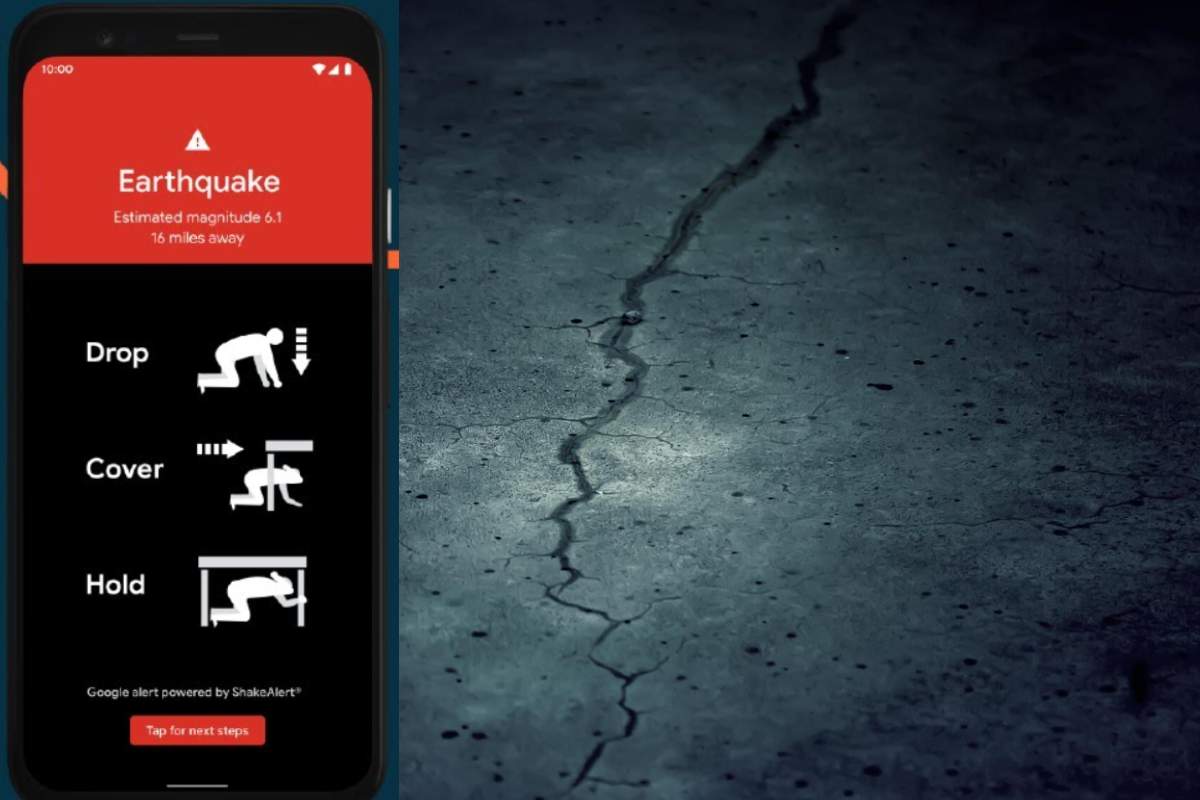
Android has now rolled out earthquake alerts as part of a specialized algorithm that designed to detect earthquakes and then send warnings to everyone in the vicinity who could be affected by them
Hot News, folks! Google has rolled out an Android phone-powered alert system for earthquakes worldwide! It has been out for a minute now, but not everyone knows about it, so it’s worth looking into. As soon as you opt in to this service, the accelerometer in your Android joins one data point of billions of others, all part of a specialized algorithm designed to detect earthquakes and then send warnings to everyone in the vicinity who could be affected by them.
This feature is pretty crazy because it’s only possible due to Android phones’ insane number out there and Google’s smart use of algorithms on big data. It’s just one more example of the astounding innovative practices revealing smartphone’s potential. These things are for more than only social media, and features like this are proving it.
Google has teamed up with the United States Geological Survey and the California Office of Emergency Services to send these agencies’ earthquake alerts to Android users in California. Of course, these alerts are those generated by the ShakeAlert system. And which has already been in place and uses data that comes from traditional seismometers.
However, the significant steps in Google’s master plan to help with earthquake awareness powered by Android! Localized results will show in Google searches for earthquakes, all based on the data collected over Android phones participating in the linkup.
Essentially, the idea here is if you think you’re experiencing an earthquake, then you can head over to Google and search it up to figure out if that’s exactly what you’re experiencing or if it’s something else. Once the system has become more accurate, and Google is satisfied, the final plan is to actively send out earthquake warnings to folks who live in regions where seismometer-based warning systems aren’t available. This and other outdoor safety apps all have the potential to save thousands of lives from earthquakes in the future.
Don’t worry, though. The data collected as part of this program “de-identified” from users. The deal here is that Google only needs general location information for this concept to be useful. Both the earthquake alerts and the detection system are opt-in, too.
The cool thing is an Android phone can become a “mini seismometer” due to the internal accelerometer. And the device inside your phone detects if you rotate it. Android’s system takes out the data collected by that specialized sensor to figure out if the phone is shaking (don’t worry, it only does this when the phone is plugged in and not in use).
Android phones are so sensitive that they can detect both key types of earthquake waves, which is simply remarkable. They can see both P waves and S waves. Every individual phone can notice if something similar to an earthquake is happening. But many phones are needed to determine if it’s an earthquake.
Table of Contents
How the System Works
Every Android phone has an accelerometer, a sensor normally used to detect orientation and movement.
When the device is still and connected to power, the system can monitor subtle changes in motion. If the motion pattern matches seismic activity, a compressed snippet is sent anonymously to Google’s servers. There, advanced algorithms compare signals from multiple phones in a region to confirm an earthquake and estimate its location and strength.
This setup effectively turns a huge network of phones into a distributed detection network—not meant to replace official seismic instruments, but to complement them, especially in areas without dense seismometer coverage.
The feature is opt-in, and users can enable or disable it via their device’s Safety & Emergency settings. Alerts depend on location services being turned on.
Not Just One Sensor — A Network
A single phone on its own cannot reliably confirm an earthquake. But when many Android phones in the same area detect similar vibrations, the system can identify real seismic events. This crowdsourced approach effectively creates a global network of mini-seismometers. Geoawesome
This means that your smartphone is no longer just for calls, messages, or social apps — it can also contribute to a safety system that helps protect entire communities.
Official Collaboration and Global Rollout
In India, Google introduced the Android Earthquake Alerts System in close coordination with the National Disaster Management Authority (NDMA) and the National Centre for Seismology (NCS), both part of the government’s disaster response framework.
The rollout requires a device running Android 5 or later with internet access and location services enabled. Users who prefer not to receive alerts can turn the feature off in settings.
Across the United States and many other countries, Android Earthquake Alerts now operate either independently using phone data or in combination with official systems. These alerts help people prepare before strong shaking arrives
What the Alerts Tell You
Android currently delivers two types of alerts in supported areas:
-
Be Aware Alerts: Inform users of light shaking or minor events.
-
Take Action Alerts: Triggered for stronger shaking and designed to catch immediate attention, even overriding silent or Do Not Disturb settings. The Times of India
This dual-tier approach helps differentiate between mild tremors and events likely to cause harm, improving response decisions.
Speed, Automation, and Alert Timing
Earthquakes propagate extremely quickly, leaving no time for manual verification. As a result, Google’s Android-based warning system operates fully automatically. Alert times vary depending on distance from the epicenter—ranging from only a few seconds near the source to 30–45 seconds for users farther away.
To ensure alerts are understandable and actionable, Google has consulted with professional seismologists on both system design and alert presentation.
Types of Waves
There are two types of waves to break it down to the technical level, as mentioned above. The P wave (primary wave) of an earthquake is the first and fastest wave from an earthquake’s epicenter. Meanwhile, the S wave (secondary wave) is much slower but can be much more significant and cause more damage. Luckily, this system can detect both. This means that it can pick up the P waves of an earthquake and then let people know to prepare for the much more dangerous S wave.
This Google system can locate the epicenter of the quake and use these phones to determine its strength. The biggest key thing in the whole program is that each phone close to the earthquake. It can help the people who are further away to be aware and potentially get out in time to avoid injury.
Earthquakes move incredibly fast. However, and this speed means that Google’s Android-based warning system won’t be able to put a human in the loop at any point. This is because the earthquake warnings will range from “a couple of seconds” near the epicenter to 30 or 45 seconds outside.
Google’s eventual plan is to provide different alert levels for distant earthquakes. That’s why the company has consulted with seismologists both on the system’s design and how the alerts should appear. Over the long term, Google plans to craft an API based on this earthquake detection system. It doesn’t plan to use this system on iPhones. But then Apple would be free to use it if the API comes out.
The exciting factor, however, is what other systems would benefit from an earthquake detection API. For example, someone could build a device that incorporates this software to automatically stop an elevator in motion on the next floor and open the door. And allowing people to disembark before the earthquake hits. Gas valves could be turned off automatically. Medical procedures could be remotely halted. Fire stations could be on alert, doors open, and ready to roll. Airplane landings could be aborted if the earthquake was about to hit. Trains could slow down.
The possibilities, well, they’re endless.
Conclusion
Google’s Android Earthquake Alerts System uses a clever combination of crowdsourced phone sensor data and official seismic information to detect and communicate earthquake activity. By turning billions of devices into a global monitoring network, this system provides valuable seconds of warning that can help people take protective action. It is designed to complement, not replace, formal earthquake early-warning infrastructure, and it reflects a significant step forward in harnessing everyday technology for public safety.
Key FAQs
Q1. How do Android phones detect earthquakes?
Android relies on accelerometers inside phones to sense motion patterns that resemble seismic waves. Data from many phones is aggregated to confirm an earthquake event.
Q2. Does using this system share my personal information?
No. The data sent is anonymous and de-identified. Google uses only approximate location information to match signals to potential seismic activity.
Q3. Are alerts automatic?
Once enabled in settings and with location services on, alerts can be delivered automatically to your phone.
Q4. Can Android detect both minor and major earthquakes?
Yes. The system can notify users about a range of earthquakes, from light tremors to stronger shaking, though precision improves with more participating devices.
Q5. Will this feature work anywhere?
It is available in many countries globally and continues to expand, but effectiveness depends on a network of participating devices in your region.